| Destinations
|
|||||
Jammu and Kashmir comprises of three distinct climatic regions
with vast variance due to a sharp rise of altitude from 1,000
feet to 28,250 feet above sea level within four degrees of
latitude of the state. The state is geologically constituted
of rocks varying from the oldest period of earth's history to
the youngest present day river and lake deposits.
Jammu
Temperatures (Average) Kashmir
Best Season:March to October
Temperatures (Average) Ladakh |
More on Kashmir • Overview • History • Geography • People • Festivals • Wildlife • Adventure • Tourist Information Places to Visit • Drass • Gulmarg • Jammu • Pahalgam • Sonamarg • Srinagar • Ladakh • More on Ladakh • Pilgrim Places • Amarnath Yatra • Vaishno Devi Travelogues • Kashmir • Journey to Ladakh
Adventure |
||||
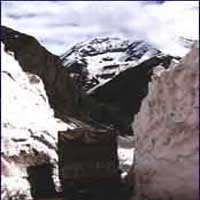 Padum is subject to
occasional heavy storms in July and August and heavy snowfall
in winter. Leh on the lee side of the Himalayan and Zanskar
range is devoid of snowfall in winter.
Padum is subject to
occasional heavy storms in July and August and heavy snowfall
in winter. Leh on the lee side of the Himalayan and Zanskar
range is devoid of snowfall in winter.Best Season: March to October Temperature (Average) Summer: 20 degrees C Winter: -15 degrees C to -3 degrees C Clothing: Light/Medium woollens in summer and heavy woollens in winter. Compiled by Puneet Sachdeva |
|||||
 |
|||||
Editor: Romola Butalia (c) India Travelogue. All rights reserved. |
|||||